Signs you may need spring replacement
A loud bang from the garage
Torsion springs often break with a sound like a gunshot, even when no one is using the door.
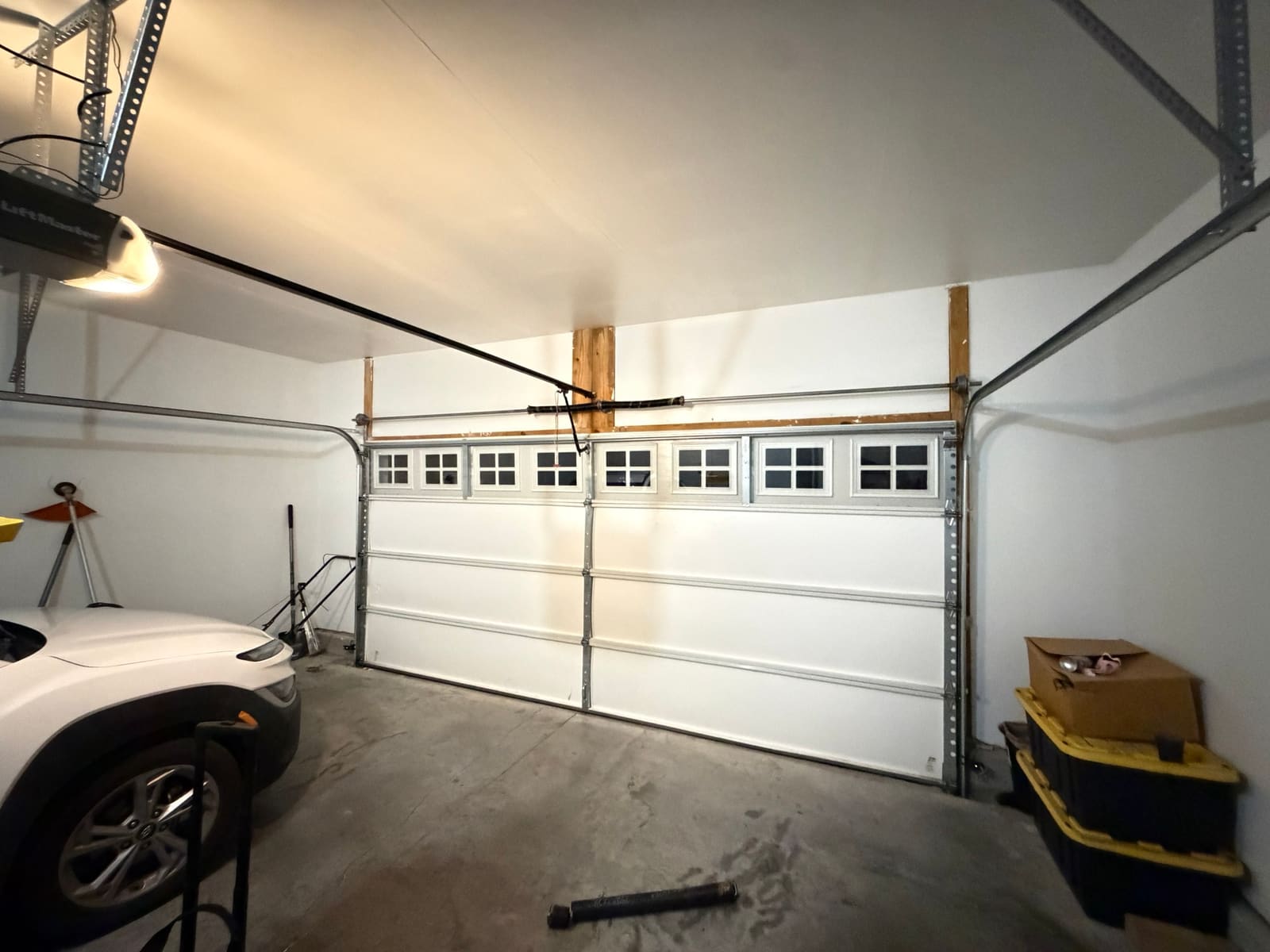
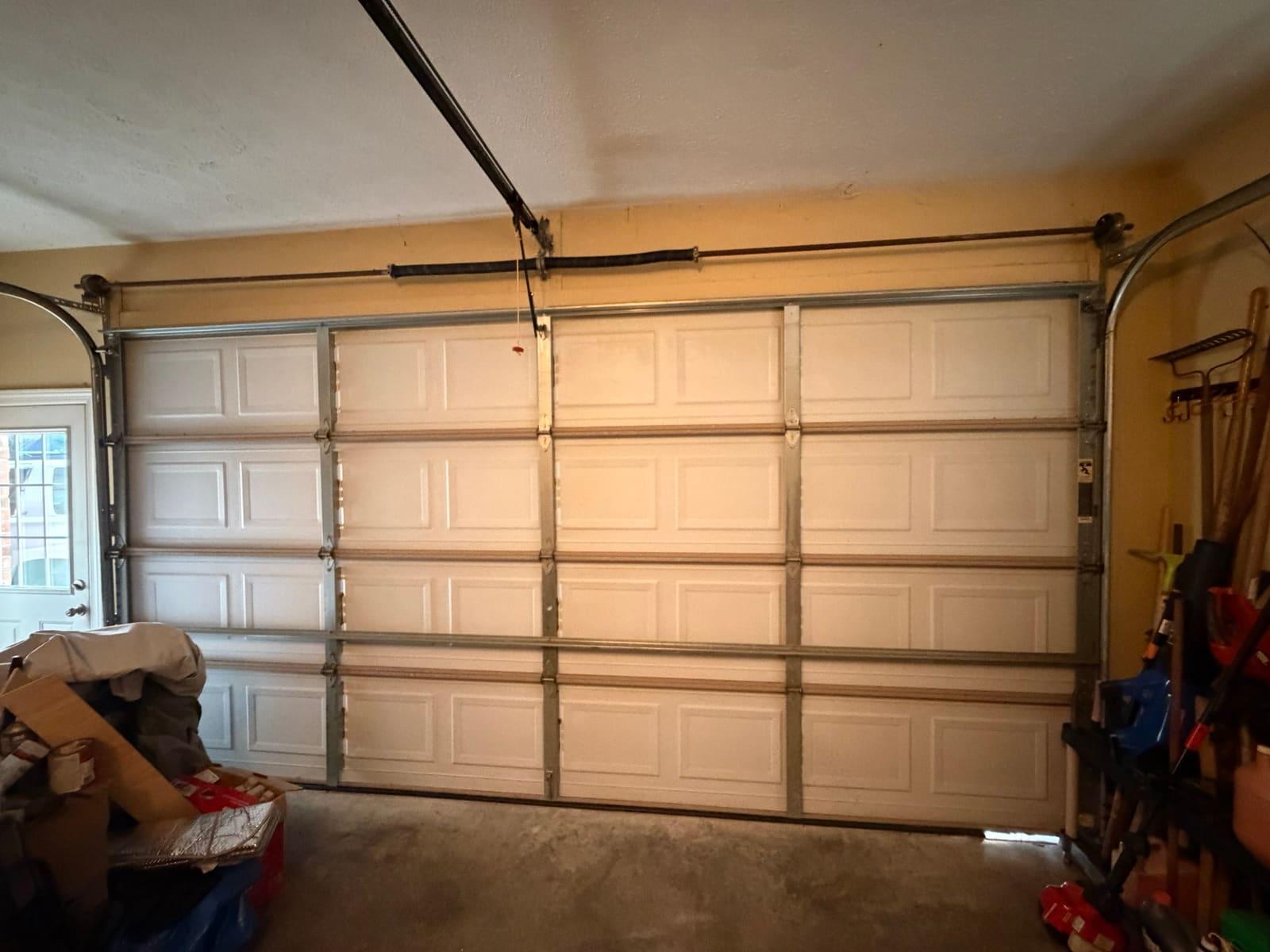
A visible gap in the spring
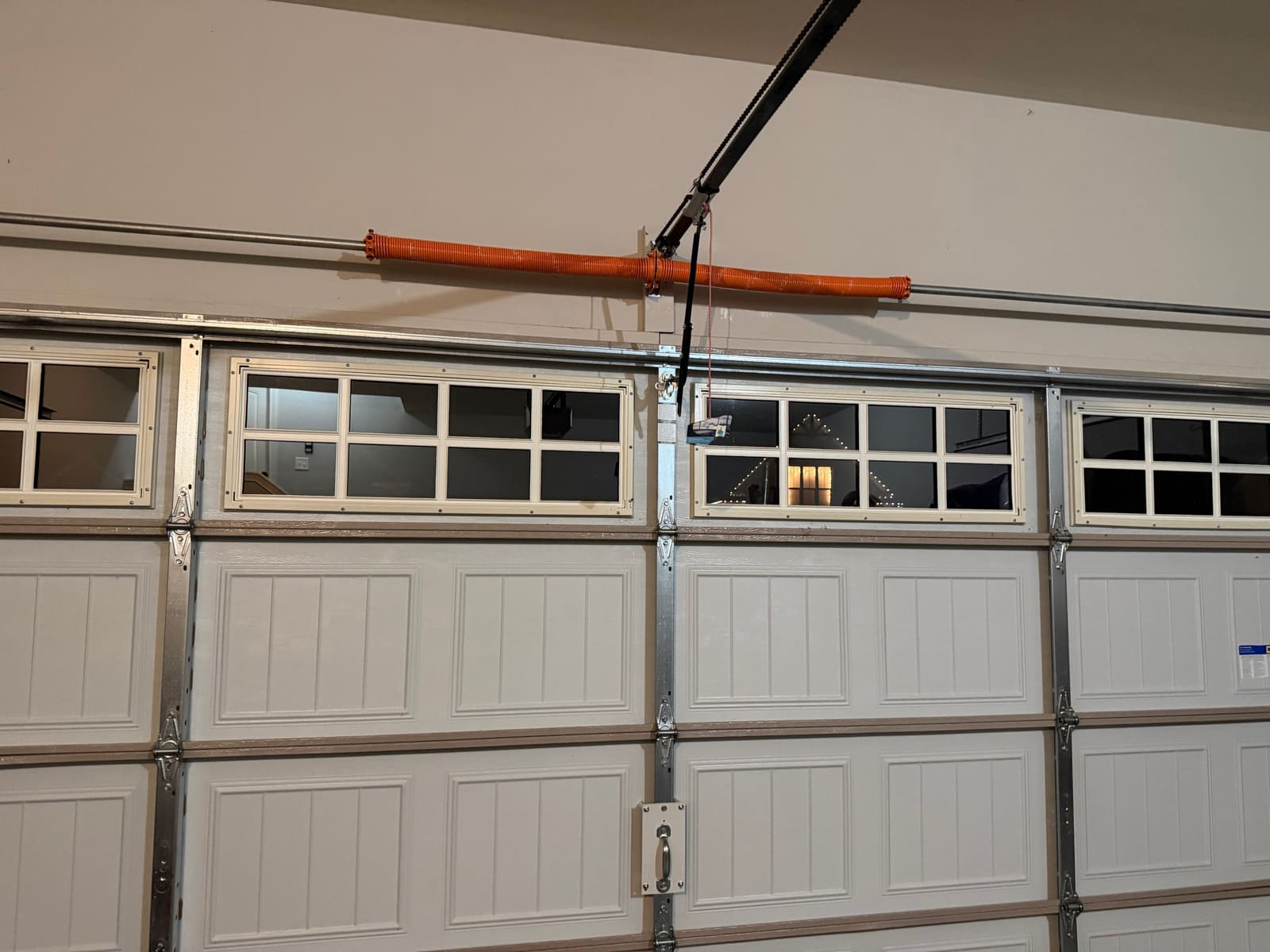
Look at the spring above the door (torsion) or along the tracks (extension). A two-inch gap in the coils means it has snapped.
The door lifts a few inches and stops
Many openers sense the extra load and quit. That is a safety feature — do not keep pressing the button.
The door is crooked or falls fast
With one spring broken on a two-spring door, the door can rise unevenly or drop quickly when closing.
Common causes
- They wear out by cycles
- Each open-and-close is one cycle. Many standard springs are rated for roughly 10,000 cycles — a few years for a busy household door.
- Rust and corrosion
- Humidity and rust add friction between the coils and weaken the steel.
- Wrong spring size
- A spring that does not match the door’s weight and height works too hard and fails early — and leaves the door out of balance.
- Cold weather
- Steel is under more stress in cold snaps, and springs near the end of their life often fail on cold mornings.
What a professional inspection covers
Spring replacement done right is more than swapping a part:
- Identify spring type (torsion or extension) and measure wire size, length, and inside diameter
- Weigh or calculate the door’s weight so the new springs match it
- Check cables, drums, bearings, and bottom brackets that were stressed when the spring broke
- Install and wind or set the springs using proper tools
- Balance-test the door by hand and re-check the opener’s force and travel settings
- Run the safety-reversal test before the door goes back into daily use
What affects the price
We don’t post one-size-fits-all prices, because the right repair depends on your door. Here’s what changes the cost — and you’ll hear the price before any work starts.
- Torsion vs. extension springs
- They are different parts with different installation procedures.
- One spring or two
- Doors with two springs are usually best served by replacing both so they wear evenly.
- Spring size and cycle rating
- Heavier doors need bigger springs; higher-cycle springs cost more up front and last longer.
- Related damage
- A broken spring can fray cables or strain the opener, which may need attention at the same time.
Repair or replace?
Repair usually makes sense when
- Replace springs when the rest of the door is in good shape — this is the normal fix
- Consider higher-cycle springs if your household uses the door many times a day
Replacement is worth considering when
- Consider a new door if the springs failed because the door is damaged, waterlogged, or far heavier than it should be
On a two-spring door, if one spring broke, the other has seen the same number of cycles and is usually close behind.
Do not attempt to replace or adjust springs yourself
- Wound torsion springs store enough energy to break bones and cause severe injuries if a winding bar slips.
- Do not loosen the set screws on a torsion spring or the bottom brackets on the door.
- Do not use the opener to force a door with a broken spring — you can damage the opener and the door.
- If the door is open when a spring breaks, keep everyone clear and do not pull the emergency release cord; the door may fall.
Spring Replacement FAQ
Should both springs be replaced?
If your door has two springs and one broke, replacing both is usually recommended. They have the same wear, and a new spring paired with an old one leaves the door unevenly balanced.
Can I open the door manually with a broken spring?
It is not recommended. Without the spring, you would be lifting the door’s full weight, and it can drop suddenly. Call and we will talk through your situation, including getting a car out.
How long do garage door springs last?
It depends on the spring’s cycle rating and how often the door is used. A door used four or five times a day can wear through a standard spring in several years.
What is the difference between torsion and extension springs?
Torsion springs sit on a bar above the door and twist to lift it. Extension springs run along the horizontal tracks and stretch. Extension springs should always have a safety cable running through them.