Signs you may need garage door repair
The door is suddenly heavy or slow
An opener straining to lift the door usually means the springs are no longer carrying the weight — often a broken or worn-out spring.
Grinding, popping, or squealing
Dry or worn rollers, loose hardware, or worn hinges are common. A sudden loud bang is different: it often means a spring broke.
The door shakes or travels unevenly
One side rising ahead of the other can point to a cable issue, a slipped drum, a bent track, or an unbalanced spring.
It reverses or stops partway
Misaligned safety sensors, an obstruction, a binding track, or an opener force setting that no longer matches the door.
Gaps at the bottom or light around the edges
A worn bottom seal or weatherstripping, an out-of-level door, or a limit setting that stops the door short.
Common causes
- Normal wear
- Springs, rollers, and openers are wear items. A door that cycles several times a day simply uses them up faster.
- Lack of maintenance
- Dry moving parts and loose fasteners turn small noises into bigger failures over time.
- Impact damage
- Bumping the door with a vehicle can bend panels or tracks and knock rollers out of line.
- Heat, humidity, and temperature swings
- Middle Tennessee summers and cold snaps affect lubricants, weather seals, and metal hardware. Rust on springs and cables shortens their life.
What a professional inspection covers
A proper repair visit looks at the whole door, not just the part you noticed. Typical checks include:
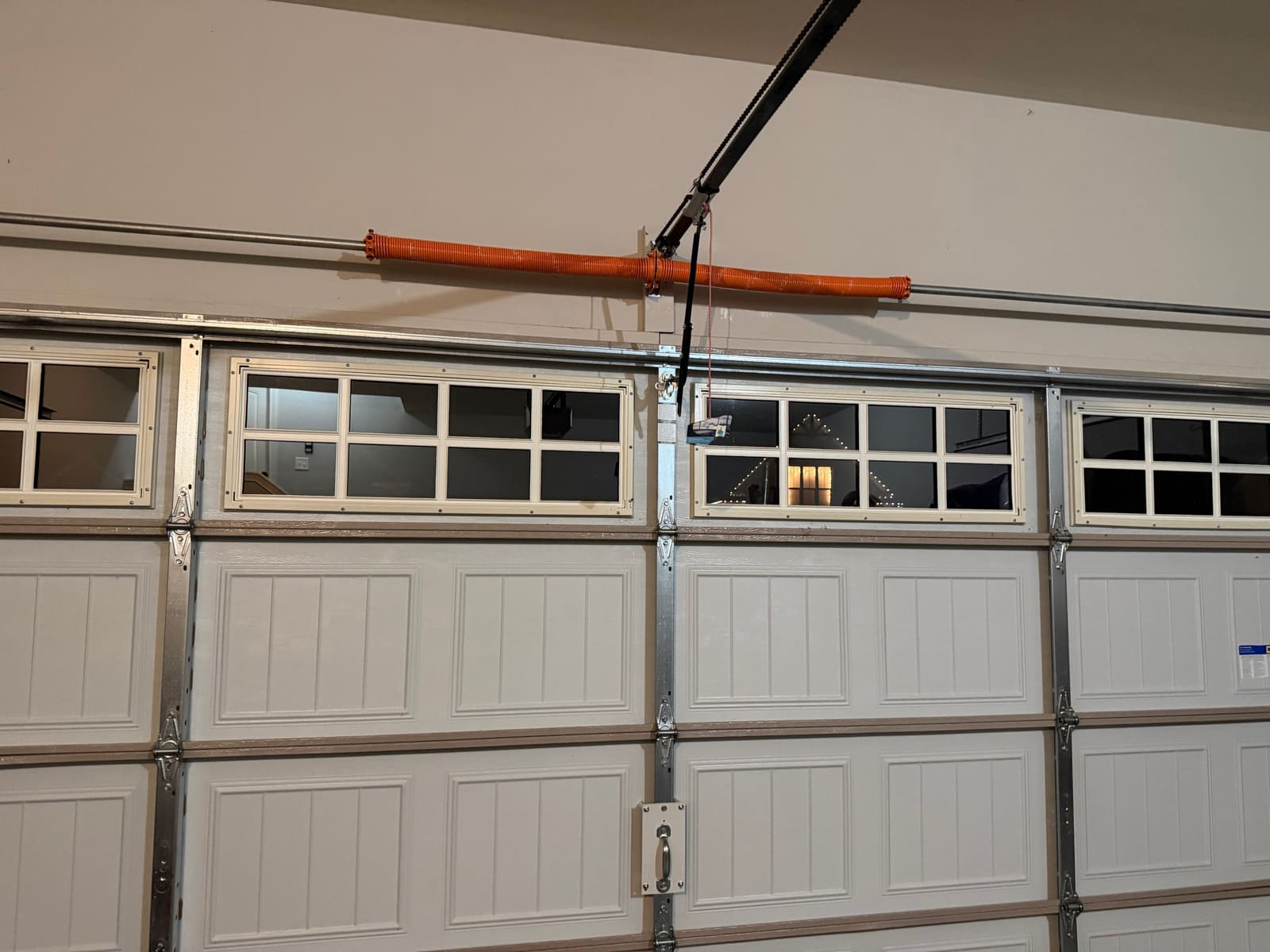
- Springs: type, condition, rust, gaps in the coils, and whether the door is balanced
- Cables and drums: fraying, kinks, and whether the cable sits correctly on each drum
- Rollers, hinges, and brackets: wear, wobble, and loose or missing fasteners
- Tracks: alignment, bends, and secure mounting
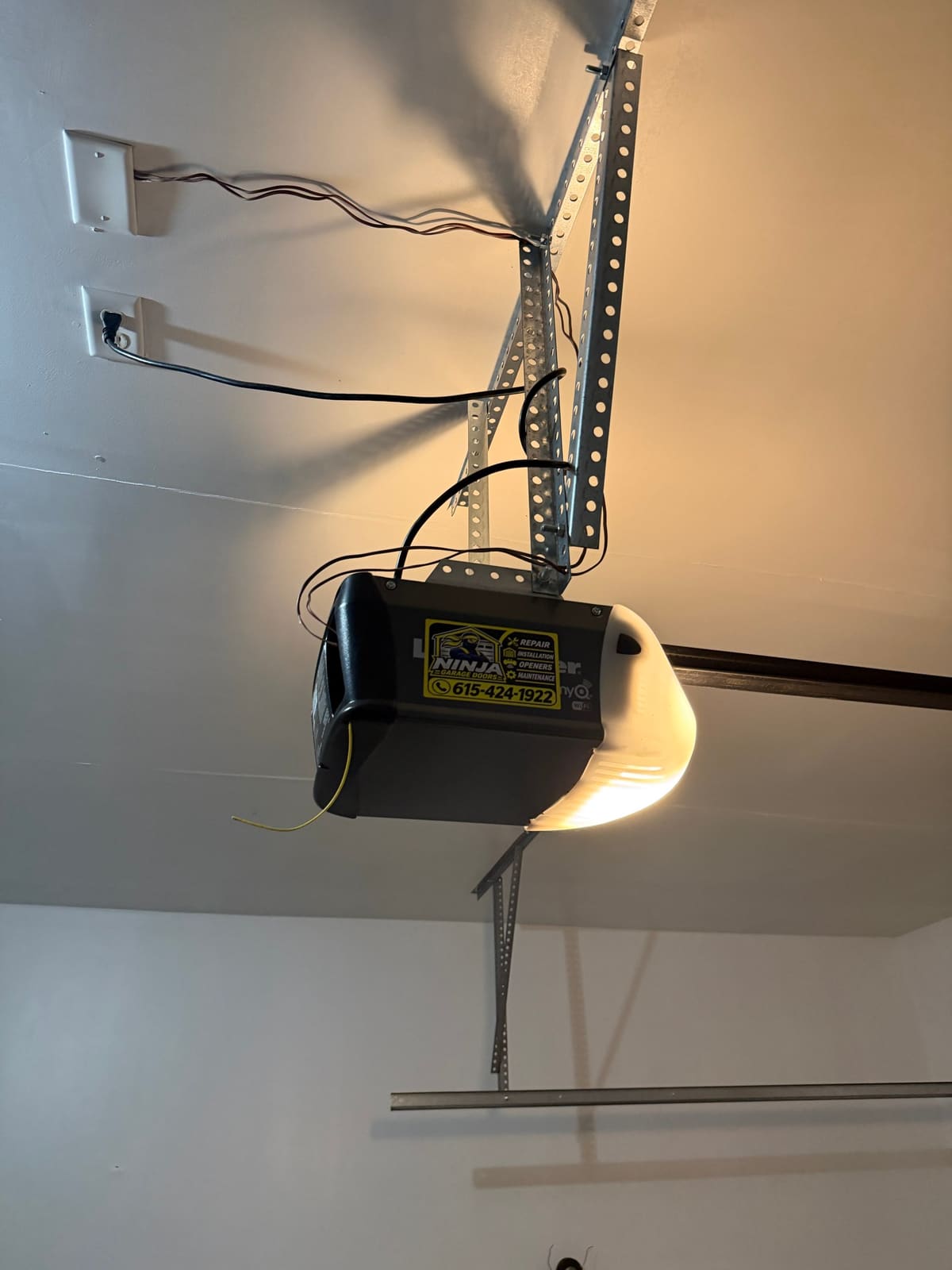
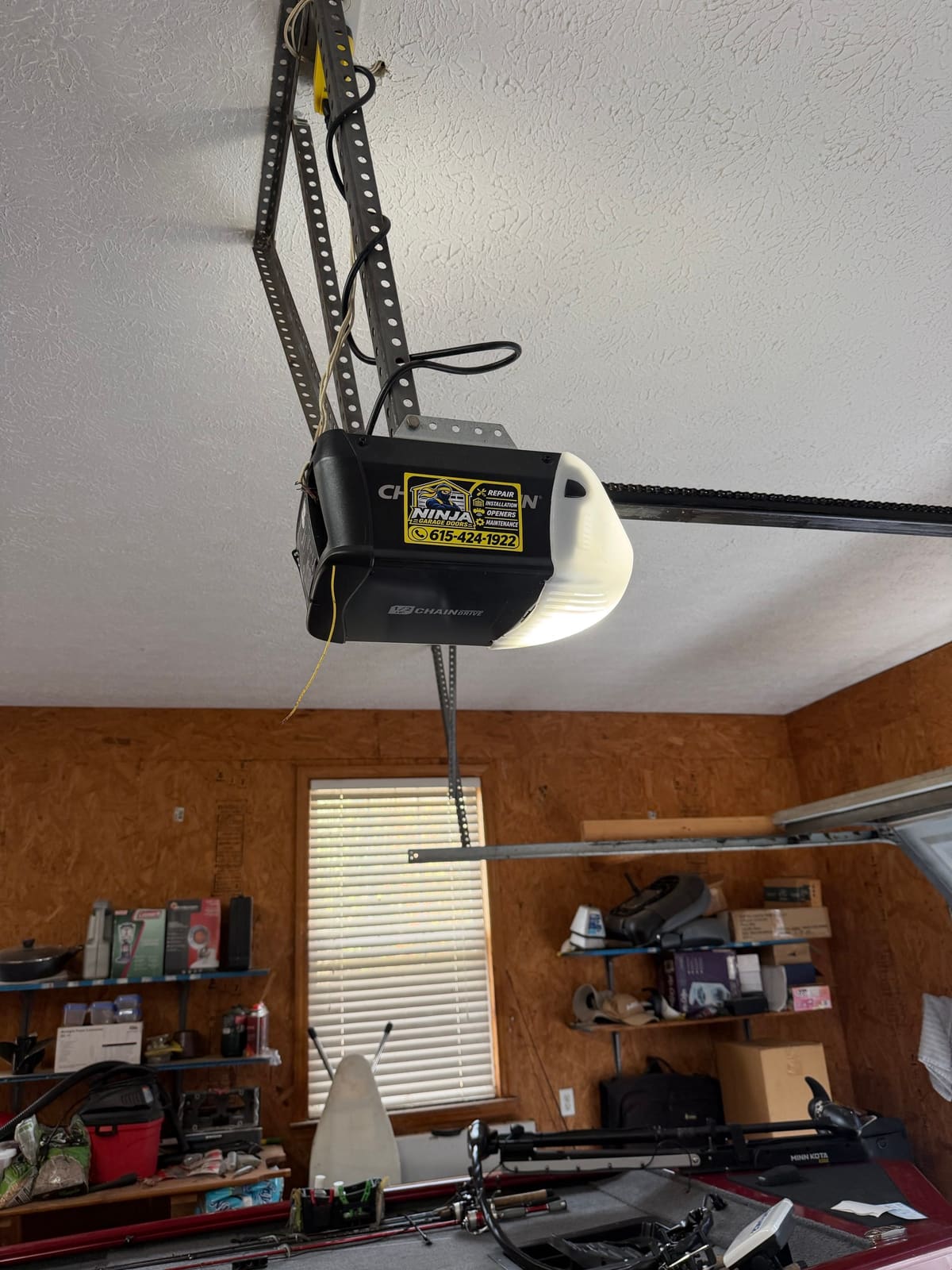
- Opener: drive, force and travel settings, remotes and wall control
- Safety: photo-eye sensors and the automatic reversal test
What affects the price
We don’t post one-size-fits-all prices, because the right repair depends on your door. Here’s what changes the cost — and you’ll hear the price before any work starts.
- Which part failed
- A loose bracket and a pair of torsion springs are very different jobs in parts and labor.
- Door size and weight
- Heavier doors (wood, insulated, oversized double doors) need heavier-duty parts.
- Number of problems found
- One failure often causes another — a broken spring may also have stressed cables or the opener.
- Part availability
- Common parts are easier to source than parts for older or uncommon doors and openers.
Repair or replace?
Repair usually makes sense when
- The door panels are straight and structurally sound
- The problem is a wear part: springs, cables, rollers, hinges, seals
- You are happy with how the door looks and insulates
Replacement is worth considering when
- Several panels are cracked, rotted, or badly dented
- Repairs keep stacking up on an old, worn door
- You want better insulation, quieter operation, or a new look
If a door is worth repairing, we will say so. If repairs no longer make sense, you will hear why.
Why garage door repair is not casual DIY
- Springs, cables, and the bottom brackets hold stored energy. Releasing it the wrong way can cause serious injury.
- A typical two-car door is heavy. Never stand under a door that is not moving smoothly.
- Lubricating rollers or replacing remote batteries is fine for homeowners. Leave springs, cables, and bottom brackets to a trained technician.
Garage Door Repair FAQ
How often should a garage door be serviced?
A yearly check-up is a sensible rhythm for most homes. Between visits, watch and listen for changes in speed, sound, and balance, and run the monthly reversal test with your opener.
Is it safe to keep using a noisy door?
A little noise from dry rollers is not an emergency. A loud bang, a door that suddenly feels heavy, or a frayed cable is — stop using the door and call.
Do you repair any brand of door?
Tell us the brand and model if you know them (the opener usually has a label on the motor unit). We will let you know on the call whether we can service it.
What should I do before the technician arrives?
If the door is stuck, leave it where it is. Do not pull the emergency release on a door that is open with a broken spring — the door can drop.